


Choosing the right scaffolding type starts with the job site, not the product name. A straight building facade, a refinery pipe rack, a power plant boiler area, and a bridge repair project all create different access problems. Height, load, ground condition, working space, safety rules, and assembly time can change the scaffold choice quickly.
That is why a scaffold order should start with the site, not a fixed product list. A frame scaffold may suit a clean building elevation. Ringlock or tube and clamp scaffolding may work better around tanks, pipes, steelwork, and other irregular structures. Mobile scaffold towers help with light maintenance work, while suspended scaffolding may enter the discussion when high-rise facade access cannot start from the ground.
This guide explains the main types of scaffolding, where they are used, how common systems compare, and what to confirm before requesting a quotation.
What Are the Main Types of Scaffolding?
On most job sites, the first question is not the scaffold name. It is how the working platform needs to behave. Does it stand from the ground, hang from the building, move across the floor, or support a heavy load? Once that is clear, the options narrow quickly.
For general construction and facade work, buyers often start with supported scaffolding. This broad group includes frame scaffolding, ringlock scaffolding, cuplock scaffolding, kwikstage scaffolding, and tube and clamp scaffolding when the project needs stable access from the ground up.
Suspended scaffolding works differently. The platform hangs from an overhead structure, so it can suit high-rise facade repair, painting, window replacement, or maintenance work where a full ground-supported scaffold would take too much space.
Mobile scaffolding helps when workers need to move between work areas, especially in warehouses, factories, commercial buildings, and light maintenance jobs. Cantilever scaffolding enters the discussion when workers cannot place standards directly below the work area. Shoring scaffolding is different again because it supports concrete, beams, slabs, or temporary structural loads.
In export supply, the final shortlist usually becomes practical: frame scaffolding for simple building access, ringlock or tube and clamp scaffolding for complex structures, cuplock scaffolding for regular construction and shoring layouts, and mobile towers for light maintenance access.
Basic Scaffolding Components Buyers Should Know
Before comparing scaffolding types, it helps to understand the parts that usually appear in a quotation. A request such as “Please quote scaffolding for a 20-meter building” gives the supplier a direction, but not enough detail for a safe or accurate offer.
A real scaffold package usually includes vertical supports, horizontal members, platform parts, base adjustment, bracing, access parts, and safety components. Two suppliers may both say “frame scaffolding” or “ringlock scaffolding,” but the final package can differ a lot once buyers check the scaffold planks, scaffold jacks, scaffold braces, guardrails, toe boards, stair access, small fittings, and packing list.
The vertical members carry most of the load. In frame scaffolding, welded frames create the main support. In ringlock or cuplock scaffolding, standards do the same job and also provide connection points for ledgers and braces. Working height is only one part of the calculation; bay length, lift height, wall tie plan, and the number of working levels all affect the final scaffold layout.
Horizontal members shape the scaffold bay. Ledgers run along the scaffold length, while transoms or bearers help support the platform width. On a straight facade, the layout may stay simple. On an industrial site, pipes, valves, tanks, cable trays, and steel structures can interrupt a normal bay arrangement.
Braces keep the scaffold stable. They may not stand out in a product photo, but they make a big difference on site. If a scaffold feels loose, twists under movement, or needs extra support in windy conditions, the issue often starts with poor bracing, weak tying, or an incomplete layout.
Platforms create the actual working area. A facade team may need long, continuous plank runs. A maintenance team inside a plant may need shorter platforms arranged around equipment. A shoring project may need a different top support arrangement instead of normal working planks.
Base jacks help level the scaffold when the ground is not flat. U head jacks support beams or formwork in shoring work. These parts also affect quantity calculation, pallet packing, and container loading for export orders.
Small fittings matter most in tube and clamp scaffolding. A tank, boiler, pipe rack, or steel platform rarely gives workers a clean line to follow. The scaffold has to turn, step around obstacles, tie back to steelwork, or connect tubes at different angles. Double couplers, swivel couplers, beam clamps, joint pins, and tie parts should appear clearly in the fitting schedule, not only as a vague accessory line.
Safety and access parts also need early checking. A low offer may include the main structure but leave out enough guardrails, toe boards, ladders, stair units, gates, or access parts. That gap may only appear during installation or site inspection. A working scaffold needs more than a frame that can stand; workers also need a clear route to climb, move, carry tools, and work along the platform without exposed edges or improvised access.
Types of Scaffolding by Structure and Support Method
A scaffold can look simple from a distance, but its support method changes the whole job. Some scaffolds stand from the ground. Some hang from the building. Some move across the floor. Others support concrete, beams, slabs, or temporary structural loads. This is the simplest way to compare scaffolding before looking at brand names or system names.
Supported Scaffolding
Supported scaffolding stands on a base, frame, post, tube, standard, or another rigid support. Most construction buyers deal with this type first because it covers common site work such as building facades, masonry walls, commercial blocks, renovation projects, and general exterior access.
This group can include frame scaffolding, ringlock scaffolding, cuplock scaffolding, kwikstage scaffolding, tube and clamp scaffolding, and some shoring arrangements. The exact system depends on the site. A simple elevation may suit frame scaffolding. A plant area with pipe racks, tanks, and steel platforms may need ringlock or tube and clamp scaffolding because the scaffold has to follow obstacles instead of a clean wall line.
For buyers, the practical questions matter most: can the ground carry the scaffold, how many working levels does the project need, how will the structure tie back, and how will workers move safely along the platform?
Suspended Scaffolding
Suspended scaffolding does not start from the ground. The platform hangs from an overhead structure, which can make sense on high-rise facade repair, painting, window replacement, or exterior maintenance where a full supported scaffold would block too much space or take too long to erect.
This type is most useful when the task stays close to the facade and does not require heavy material storage on the platform. Anchorage, lifting equipment, wind exposure, worker training, and local site rules all need attention. Suspended scaffolding can look economical during early planning, but the platform, lifting points, and fall protection still need close control during use.
Mobile Scaffolding
Mobile scaffolding helps when workers need to change position often. A maintenance team may need to repair lights, paint walls, install MEP lines, inspect ceilings, or work across several warehouse bays. A mobile tower with caster wheels can save time because the crew can move it, lock it, and use it again in another position.
This type works best on firm, level surfaces. Wheel quality, brakes, guardrails, platform width, tower height, stabilizers, and outriggers all matter. Mobile scaffolding usually serves light to medium-duty access. It should not be treated as a heavy-duty industrial scaffold or a shoring system.
Cantilever Scaffolding
Cantilever scaffolding enters the discussion when workers cannot place the scaffold directly below the work area. The ground may have traffic, water, weak soil, machinery, a roof edge, or another obstruction. Instead of standing in the normal position, the scaffold extends from a supported structure or beam arrangement.
This type needs careful planning because the load travels through a different path. The support point, tie-back method, platform load, and working height all need to be checked before anyone treats it as a normal access scaffold. Cantilever scaffolding can solve difficult access problems, but it is rarely the cheapest or simplest option.
Shoring Scaffolding
Shoring scaffolding has a different purpose from normal access scaffolding. Workers may stand on it during installation, but its main job is to support weight from concrete, formwork, beams, slabs, bridge sections, or temporary structural work.
This is where worker access and load support need to be separated. A facade scaffold helps workers reach a wall. A shoring scaffold helps carry structural load until the permanent structure can take over. Ringlock scaffolding, cuplock scaffolding, steel props, heavy-duty frames, U head jacks, and other support parts can all appear in shoring projects. The final choice depends on the concrete load, slab height, beam layout, ground condition, and project schedule.
Once these support methods are clear, buyers can compare modern scaffold systems more easily. The next step is to look at ringlock, cuplock, frame, tube and clamp, kwikstage, and mobile towers by how they actually fit the site.
Types of Scaffolding Systems Used in Modern Construction
After the support method is clear, the next question becomes more practical: which scaffold system should the project use? Ringlock, cuplock, frame, tube and clamp, kwikstage, mobile towers, and baker scaffolds all give workers access, but they solve different problems on site.
A good scaffold system has to match the work area, load requirement, erection team, project schedule, and local stock. A contractor may use frame scaffolding on a clean building elevation because it goes up quickly. The same contractor may switch to ringlock or tube and clamp scaffolding for a refinery shutdown because straight frames cannot wrap cleanly around pipes, tanks, platforms, and steelwork.
Ringlock Scaffolding

Ringlock scaffolding is a strong choice when the site layout refuses to stay simple. The system uses vertical standards with rosette connection points, and workers lock ledgers, braces, and other members into those points with wedge pins. That connection style gives the scaffold more direction choices than a basic frame system, especially when the structure has corners, curves, height changes, or equipment in the way.
That is why ringlock often appears in industrial maintenance, oil and gas projects, power plants, bridge work, shipyards, and large construction sites. Around a boiler, tank, pipe rack, or bridge pier, it gives the erection team room to adjust the layout without turning the whole job into a full custom tube-and-clamp build. Before ordering, confirm the standard height, ledger length, brace layout, platform type, base jack, stair access, guardrail parts, and surface treatment.
Cuplock Scaffolding

Cuplock scaffolding suits projects that need fast modular assembly with fewer loose fittings. The system uses cup points on the standards, and ledgers or transoms lock into those cups. Once the base has been set out properly, workers can build regular scaffold bays at good speed.
Cuplock often fits building construction, facade access, slab support, staircase towers, birdcage scaffolds, and shoring arrangements. It feels less free-form than ringlock, but that can help on repetitive layouts. Long straight runs, repeated bay sizes, and clear grids allow cuplock crews to keep the erection process efficient. In crowded plant areas with many obstacles, ringlock or tube and clamp may still give the site team more freedom.
Frame Scaffolding

Frame scaffolding is the system many buyers recognize first. It uses welded frames, cross braces, platforms, base jacks, coupling pins, and guardrail parts. On a clean building elevation, it can go up quickly and keep labor simple. That makes it a practical option for residential work, commercial buildings, plastering, painting, renovation, and general facade access.
That simplicity is also the limitation. Frame scaffolding fits best when the work area follows a straight and predictable line. Once the site has tanks, pipes, steel platforms, uneven offsets, or irregular shapes, the frame system may need extra parts or another scaffold type to make the layout work. For export buyers, the key details include frame size, tube thickness, cross brace length, walk-through or ladder frame design, platform type, coupling pins, base jacks, and packing method.
Tube and Clamp Scaffolding

Tube and clamp scaffolding gives the erection team the most freedom, but it also demands more skill. Workers build the structure from scaffold tubes and couplers instead of relying on prefabricated frames or fixed modular nodes. That lets them adjust lengths, angles, ties, returns, and support points around difficult areas.
This system makes sense around refineries, tanks, boilers, pipe racks, vessels, steel structures, and older buildings where a regular bay layout does not fit. A scaffold crew can turn the structure around an obstacle, add a short lift, tie into steelwork, or build access in a space where standard modules would leave gaps. The trade-off is labor and control. A serious quotation should show more than tube quantity; it should include coupler types, tube lengths, bracing plan, platform arrangement, ties, base support, beam clamps, and special fittings.
Kwikstage Scaffolding
Kwikstage scaffolding is a modular wedge system that appears often in markets such as Australia, South Africa, and other regions where contractors already use compatible parts. It offers quick assembly, strong bay control, and a familiar working method for scaffold teams trained on that system.
The system can suit building construction, facade work, maintenance projects, mining-related work, and general access. It usually performs best when the local market already has Kwikstage inventory, trained erectors, and replacement parts. Buyers who serve Kwikstage markets should check compatibility carefully, because small differences in wedge design, standards, ledgers, transoms, braces, and accessories can create problems when new stock mixes with existing equipment.
Mobile Scaffold Towers

Mobile scaffold towers sit between a full scaffold system and a maintenance tool. They help workers reach ceilings, walls, lights, ducts, signs, or equipment without building a fixed scaffold every time. A tower with caster wheels can move across a warehouse, workshop, hall, or commercial building much faster than a fixed access scaffold.
A mobile tower still has limits. Floor condition, platform height, wheel size, brake quality, frame material, guardrails, stabilizers, and outriggers all affect safe use. Treat mobile scaffolding as a light to medium-duty access solution. It saves time when workers move often, but it is not the right substitute for ringlock, cuplock, tube and clamp, or shoring scaffolding on heavy-duty construction or industrial access jobs.
Baker Scaffolding
Baker scaffolding is a small mobile scaffold often used for indoor work and low-height tasks. Painters, drywall workers, electricians, decorators, and maintenance teams may use it when ladders feel inefficient but a full scaffold tower would be too much for the job.
Its value comes from convenience. Workers can set it up quickly, move it through indoor spaces, and use the platform for short tasks. However, baker scaffolding belongs in the light-duty category. It should not be treated like a heavy industrial scaffold or a high-rise access system. For buyers, the main details include platform height, frame width, caster size, brake design, guardrail option, platform board, and folding or knock-down packing.
Choosing between these systems becomes easier when the project comes first. A clean building facade may point to frame scaffolding. A heavy industrial site may call for ringlock or tube and clamp. A repetitive construction layout may suit cuplock. A market with existing wedge-system stock may prefer kwikstage. An indoor maintenance team may only need a mobile tower or baker scaffold. The right system is the one that fits the site, the crew, the load, and daily use.
Traditional Types of Scaffolding in Construction
Some scaffolding names come from older construction methods, local site language, or specific access equipment rather than modern modular systems. Buyers may still see these terms in drawings, tender files, safety documents, or competitor articles. They help explain how the scaffold works, but they do not always match the way an export supplier quotes a complete scaffold package today.
Single and Double Scaffolding
Single scaffolding often appears in brickwork and simple masonry projects. It uses one main row of vertical supports along the wall, with horizontal members and platform boards arranged for basic access. In modern procurement, buyers usually treat it as a layout description rather than a final product name.
Double scaffolding uses two rows of supports, which gives the structure more independence from the wall. It often appears in stone masonry or heavier facade work where the wall cannot take direct support. Buyers still need to check how the scaffold ties back, carries platform load, and stays stable along the working face.
Patented Scaffolding
Patented scaffolding usually refers to prefabricated scaffold components with a specific frame, coupling, or adjustable design. Today, buyers rarely order it under this name. They usually ask for a clearer system, such as frame scaffolding, ringlock scaffolding, cuplock scaffolding, kwikstage scaffolding, or mobile scaffolding. If a tender mentions patented scaffolding, confirm whether it means prefabricated steel scaffolding or a specific certified system.
Mast Climbing, Pump Jack, and Ladder Jack Scaffolding
Mast climbing scaffolding uses a powered platform that travels along one or more vertical masts. It can suit tall facades, cladding work, and exterior repair, but it sits closer to powered access equipment than ordinary scaffold supply.
Pump jack scaffolding appears more often in siding, painting, and light exterior work in some markets. Ladder jack scaffolding uses brackets attached to ladders to support a narrow platform for short-duration, light-duty tasks. Both have a narrower use range than frame, ringlock, or tube and clamp scaffolding, so B2B buyers need to treat them as task-specific options.
Trestle, Bamboo, and Timber Scaffolding
Trestle scaffolding uses trestles, tripods, or similar supports for low-height indoor work such as plastering, painting, ceiling work, or small repairs. Bamboo and timber scaffolding still appear in some regional construction markets, especially where local crews have long experience with traditional materials.
For international buyers, these options rarely match the need for repeatable specifications, export packing, test documents, and standardized replacement parts. Steel and aluminum scaffolding usually make more sense for modern export projects because they offer clearer specifications, more consistent performance, and easier long-term supply.
Traditional scaffold terms still matter because they help buyers understand older documents and local site language. Even so, most procurement decisions come back to practical systems: frame scaffolding for simple access, ringlock scaffolding for flexible heavy-duty work, cuplock scaffolding for regular layouts and shoring, tube and clamp scaffolding for irregular structures, and mobile scaffolding for light maintenance tasks.
Types of Scaffolding Materials
The scaffold type tells buyers how the structure works. The material tells them how the scaffold will behave on site. Steel, aluminum, bamboo, timber, and fiberglass differ in strength, weight, handling speed, corrosion resistance, and long-term reuse value.
For export buyers, material choice also affects surface treatment, container loading, replacement parts, inspection, and rental life. A contractor may focus on load capacity. A rental company may care more about reuse and repair. A maintenance team may need lighter parts that workers can move quickly. Material selection should come before final price comparison.
Steel Scaffolding
Steel remains the main material for heavy-duty scaffold projects. It gives the structure strength, stiffness, and long service life, especially when the scaffold has to carry workers, tools, platforms, and repeated daily use. Construction sites, industrial plants, oil and gas projects, power plants, bridges, and infrastructure work often need this kind of durability.
Surface treatment matters on steel scaffolding. A scaffold used inside a dry warehouse does not face the same conditions as one used near the sea, on a rainy construction site, or in a rental fleet that moves from job to job. In tougher environments, buyers usually look beyond the word “galvanized” and check how the coating was applied, how the surface looks after production, and whether the finish can handle outdoor exposure and repeated handling.
Hot-dip galvanized scaffolding often makes sense for long-term outdoor use, coastal projects, rental stock, and industrial sites where parts may stay exposed for months. Painted or pre-galvanized parts can still work for lighter jobs or tighter budgets, but buyers need to treat them as project-based choices. A lower surface-treatment cost can disappear quickly if the scaffold starts rusting early, needs repainting, or loses rental value after a few projects.
Steel also gives buyers clearer specifications. They can compare tube diameter, wall thickness, steel grade, welding quality, zinc thickness, component weight, and packing method. The trade-off is weight. Steel parts take more labor to move than aluminum parts, which matters less on a fixed facade scaffold but more on mobile towers or frequent maintenance work.
Aluminum Scaffolding
Aluminum scaffolding earns its place when handling speed matters. Workers can lift, move, and assemble aluminum parts more easily, so aluminum often appears in mobile scaffold towers, indoor maintenance, painting, ceiling work, electrical work, and light access tasks.
A maintenance team inside a factory, warehouse, airport, shopping mall, or commercial building may prefer aluminum towers because the crew can shift the tower quickly without using too much manpower. Still, aluminum does not automatically replace steel. It may work well for inspection and light maintenance, but it may not suit heavy-duty construction, shoring, bridge work, or industrial access where workers carry heavier tools and materials.
For distributors, aluminum scaffolding can reduce handling pressure during transport and daily use. However, it needs careful packing to avoid dents, scratches, and profile damage during shipping. If the product enters a rental fleet, buyers need to also think about repair, replacement parts, and how the tower will look after repeated use.
Bamboo and Timber Scaffolding
Bamboo and timber scaffolding still appear in some local construction markets, especially where crews have long experience with traditional materials. Bamboo can offer light weight and local availability in the right region, while timber may still appear in older project documents or temporary local work.
For international B2B buyers, both materials usually play a smaller role. They do not offer the same standardized specifications, repeatable packing, replacement part system, or test documentation that buyers expect from steel or aluminum scaffolding. Modern export projects usually move toward steel planks, aluminum platforms, or standardized scaffold systems because they give clearer load ratings, easier inspection, and more consistent supply.
Fiberglass Scaffolding
Fiberglass scaffolding serves a narrower market, but it can matter in the right environment. Its main value comes from electrical insulation and resistance to certain corrosive conditions. That makes it relevant for electrical work, utilities, chemical plants, and special maintenance areas where ordinary metal access equipment may create problems.
The limitation is cost and availability. Fiberglass scaffolding usually does not compete with steel or aluminum for ordinary building construction. Buyers choose it when the site has a clear safety or environmental reason, not because it is the cheapest or most common option.
How to Choose the Right Scaffolding Material
In real purchasing work, the choice usually narrows down quickly. If the scaffold needs to stay outside, carry heavier loads, work around plant equipment, or serve a rental fleet for years, steel normally stays in the final comparison. If the crew needs to move the tower many times in one shift, especially indoors, aluminum becomes harder to ignore.
The other materials sit in more specific corners of the market. Bamboo and timber belong more to local construction practice. Fiberglass comes up when the site has a clear reason for it, such as electrical work or a corrosive environment.
The better question is not “Which scaffolding material is best?” It is: where will the scaffold work, how much load will it carry, how often will workers move it, how long will it stay exposed, and how many times does the buyer expect to reuse the same parts? Those answers usually point to the right material before the price list does.
Scaffolding Types Comparison Table
The table below gives a quick comparison of common scaffolding types. It will not replace a project drawing or scaffold design, but it can help buyers narrow the options before sending an RFQ.
| Scaffolding Type | Best Fit | Strength | Flexibility | Mobility | Typical Buyer Use |
|---|---|---|---|---|---|
| Supported scaffolding General access | General construction, facade work, masonry, renovation | Medium to high | Medium | Low | Buyers who need stable access from the ground up. |
| Suspended scaffolding High-rise facade | High-rise facade repair, painting, window replacement, exterior maintenance | Low to medium | Low | Vertical movement only | Contractors working on tall buildings where ground access is limited. |
| Mobile scaffolding Movable access | Indoor maintenance, painting, MEP work, warehouse access | Light to medium | Medium | High | Maintenance teams that move between work areas often. |
| Cantilever scaffolding Restricted ground | Restricted ground areas, traffic zones, upper-level access | Project-specific | Medium | Low | Projects where standards cannot stand directly below the work area. |
| Shoring scaffolding Load support | Concrete slabs, beams, bridges, formwork support | High | Medium | Low | Contractors who need temporary load support, not only worker access. |
| Ringlock scaffolding Heavy-duty modular | Industrial plants, oil and gas, power plants, bridges, complex construction | High | High | Low | Buyers who need a flexible, reusable, heavy-duty modular system. |
| Cuplock scaffolding Fast modular | Building construction, facade access, slab support, stair towers | Medium to high | Medium | Low | Buyers who need fast modular assembly on regular layouts. |
| Frame scaffolding Simple facade | Straight building facades, plastering, painting, renovation | Medium | Low to medium | Low | Contractors who need simple, fast, economical access. |
| Tube and clamp scaffolding Irregular structures | Tanks, boilers, pipe racks, refineries, irregular steelwork | High | Very high | Low | Industrial projects where standard bays cannot follow the structure. |
| Kwikstage scaffolding Wedge system | Construction, mining, maintenance, rental markets using wedge systems | Medium to high | Medium | Low | Distributors and contractors in markets with existing Kwikstage stock. |
| Trestle scaffolding Low-height work | Indoor finishing, low-height repair, painting | Light | Low | Medium | Small contractors working at low height. |
| Mast climbing scaffolding Powered vertical | Tall facade work, cladding, exterior repair | Medium to high | Low | Vertical powered movement | Contractors who need powered vertical access on long elevations. |
| Baker scaffolding Compact indoor | Drywall, painting, electrical work, light indoor maintenance | Light | Medium | High | Small crews that need a compact movable work platform. |
Use this table as a starting point, not a final specification. Before confirming a system, check the working height, load requirement, ground condition, local safety rules, access method, platform width, surface treatment, and packing plan.
How to Choose the Right Type of Scaffolding for Your Project
Choosing scaffolding by name alone often leads to the wrong package. A buyer may ask for frame scaffolding because it looks familiar, then discover that the site has too many pipes, offsets, or restricted areas for a simple frame layout. Another buyer may ask for ringlock scaffolding because it sounds stronger, even though the project only needs a short straight run on a building facade.
A better way is to start with the job site. Height, work area, load, ground condition, assembly time, and daily worker movement usually point to the right system before the quotation stage.
Choose by Project Height
Height changes the scaffold decision quickly. For low indoor work, a mobile tower, baker scaffold, trestle scaffold, or small frame scaffold may be enough. For normal building elevations, frame scaffolding, cuplock scaffolding, or ringlock scaffolding can provide stable access with repeatable bay sizes.
Taller scaffolds need more planning. Lift height, tie spacing, working levels, bracing, stair access, and wind exposure all matter. A high scaffold is not just a taller version of a low scaffold; it needs stronger layout control from the base to the top working level.
Choose by Work Area
A straight wall gives buyers more choices. Frame scaffolding can fit when the bays repeat cleanly. Cuplock or ringlock may also fit if the buyer wants a modular system with more reuse value.
Industrial sites behave differently. A refinery, tank farm, boiler area, pipe rack, or power plant rarely gives workers a clean line to follow. Pipes, valves, platforms, and steel beams can interrupt a normal bay arrangement. In those cases, ringlock scaffolding or tube and clamp scaffolding often gives the site team more room to build around the real shape of the structure.
Bridge and infrastructure work may need more than access. The scaffold may support formwork, reach around piers, follow uneven ground, or create platforms under the deck. Ringlock, cuplock, and shoring arrangements often enter the discussion because the project may need both access and load support.
Choose by Load Requirement
Some scaffolds only carry workers and hand tools. Others must handle materials, equipment, several working levels, concrete support, or formwork. For light maintenance, a mobile tower or frame scaffold may be enough. For heavier construction access, ringlock, cuplock, or tube and clamp scaffolding usually provides a stronger working structure.
If the project involves concrete slabs, beams, or formwork support, the buyer should move the discussion toward shoring scaffolding, U head jacks, props, and a proper load plan. A scaffold may look complete in a photo, but the real question is how much load the layout can carry after workers add planks, tools, materials, and daily movement.
Choose by Assembly Speed
Some projects need speed more than flexibility. A straight facade, repeated elevation, or simple renovation job may benefit from frame scaffolding because the crew can erect it quickly with fewer parts. Cuplock and kwikstage also work well when the layout repeats and the local crew already knows the system.
Ringlock needs more planning than a simple frame scaffold, but it gives better layout control on complex sites. Tube and clamp scaffolding offers the most freedom, yet it needs more skilled labor and more installation time. Buyers need to ask one practical question: will the crew spend more time building a flexible system, or more time forcing a simple system into a difficult site?
Choose by Ground Condition and Site Access
The base condition can decide the scaffold before the system name does. Flat concrete gives buyers more options. Uneven soil, weak ground, slopes, drains, traffic lanes, machinery, water, or restricted access can make the layout more complicated.
Base jacks, sole boards, adjustable supports, cantilever arrangements, and proper tying can help, but they need planning. If workers cannot place standards directly below the work area, cantilever scaffolding may enter the discussion. If the ground cannot support a heavy scaffold, the buyer may need another access method or a designed support solution.
Choose by Local Market and Reuse Plan
A scaffold system also needs to fit the local market. Some regions use frame scaffolding heavily. Others already have ringlock, cuplock, or kwikstage stock in rental yards. If a distributor plans to mix new components with existing stock, compatibility matters as much as price.
Rental companies should think about reuse before placing an order. A system that works on many job types may cost more at first but return value across more projects. Contractors with one specific project may care more about the fastest safe solution for that site.
Before requesting a quote, prepare the project type, working height, platform length, number of working levels, load requirement, site condition, preferred surface treatment, destination port, and any drawings or photos. A good scaffold choice starts with how workers will use the structure on site, not with a catalog page.
Which Type of Scaffolding Is Best for Each Application?
A scaffold that fits a building facade may fail inside a refinery. A mobile tower that saves time in a warehouse will not replace a shoring system under a concrete slab. Match the scaffolding type to the application before comparing product lists or unit prices.
Building Construction

For building construction, buyers usually start with frame scaffolding, cuplock scaffolding, or ringlock scaffolding. Frame scaffolding works well on simple elevations where the bays repeat cleanly and the part list stays easy to control. Cuplock can suit repeated building layouts, stair towers, and some support work. Ringlock becomes more useful when the building has setbacks, corners, mixed heights, or areas where a simple frame layout starts to feel limited.
Before asking for “construction scaffolding,” prepare the working height, facade length, platform width, number of working levels, wall tie condition, and reuse plan.
Facade Work

Facade work depends on the building surface and access method. A plain, uninterrupted wall gives the site team an easier job. The bays repeat, the platform line stays clean, and frame scaffolding can often keep labor and material planning under control.
The decision changes when the wall has balconies, canopies, deep returns, curved sections, or several working heights on the same elevation. Those details break the rhythm of a standard frame layout. In that kind of facade work, buyers often need ringlock for more adjustment room, or cuplock when the project still follows a regular bay pattern. For high-rise exterior repair, suspended scaffolding may also enter the discussion when full ground-supported access is not practical.
Industrial Maintenance
Industrial maintenance usually needs more flexibility than ordinary building work. Plant areas rarely give scaffold teams a clean wall line. Pipes, valves, tanks, ducts, cable trays, equipment platforms, and steel beams often interrupt the access route.
Ringlock scaffolding and tube and clamp scaffolding usually handle these conditions better than a basic frame system. Ringlock gives the project a modular structure with more layout options. Tube and clamp gives the scaffold team more freedom around unusual angles, tight spaces, and short returns. For industrial buyers, the quotation should also cover couplers, beam clamps, tie parts, short tubes, stair access, guardrails, toe boards, and other parts needed to work around equipment.
Oil and Gas Projects
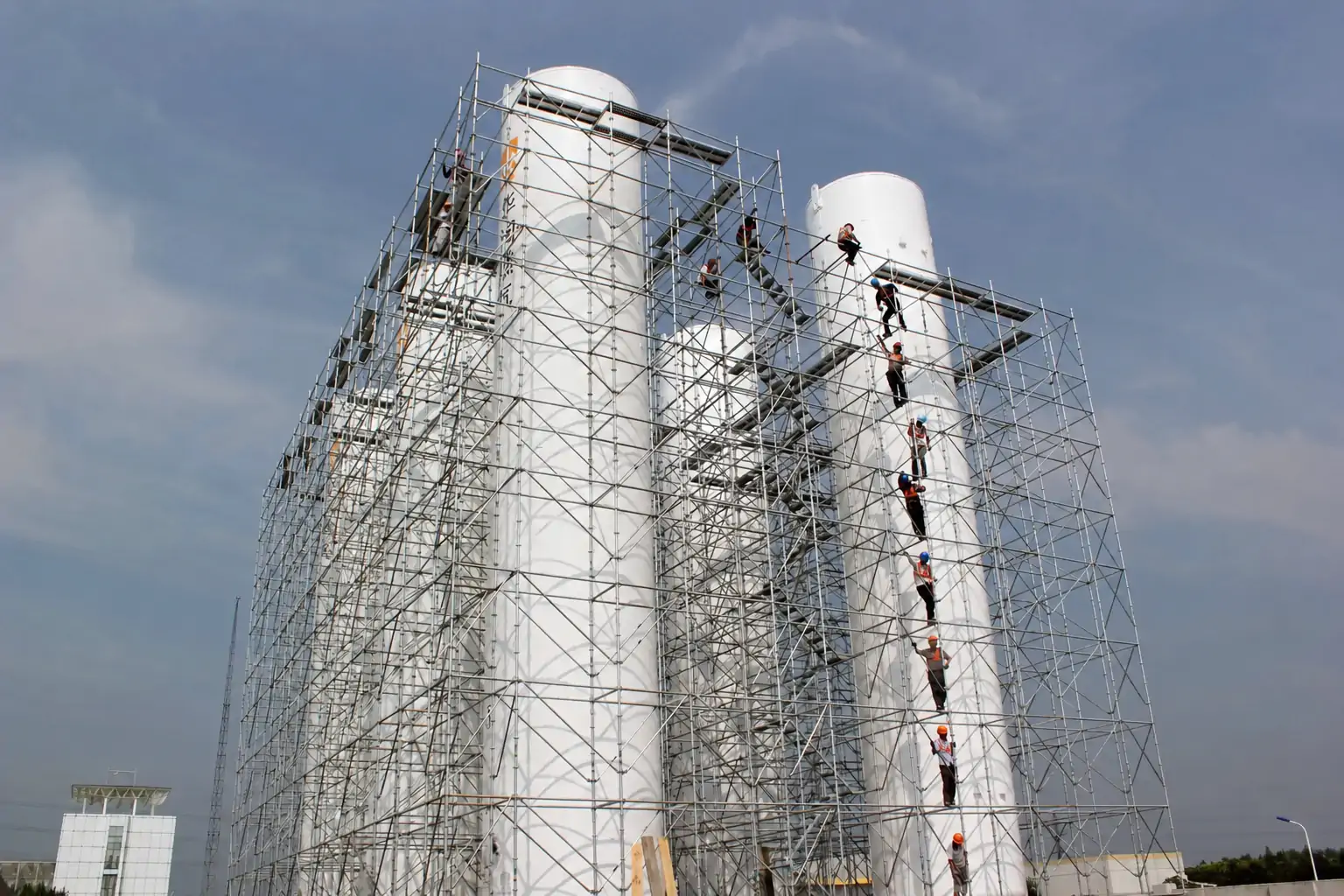
For refinery, tank farm, and pipe rack access, our oil and gas scaffolding page explains how different scaffold systems are used in these project conditions.
Ringlock and tube and clamp scaffolding are usually the strongest starting points. Ringlock helps when the buyer wants a reusable modular system that can handle many layouts. Tube and clamp helps when the scaffold must wrap around pipes, tanks, and steel members with fewer regular bay lines. Hot-dip galvanized steel parts can also make sense where components face outdoor exposure, handling damage, and long service cycles.
Power Plant Maintenance

Power plant scaffolding often needs both strength and shape control. Boiler walls, ducts, pipes, cable trays, steel platforms, and narrow service areas cut through the access route. On these jobs, the system has to fit the equipment first.
Ringlock can fit when the crew needs a strong modular layout across several levels. Tube and clamp becomes useful in awkward corners, short returns, and tight spaces where fixed bay sizes leave gaps. Mobile towers still have a place for small inspection or maintenance tasks on firm indoor floors, but they usually stay outside the main access plan for boiler areas, pipe routes, and heavy maintenance zones.
Bridge and Infrastructure Work

Bridge and infrastructure projects often move beyond simple access. The scaffold may need to reach under a deck, wrap around piers, support formwork, create inspection platforms, or handle uneven ground. For project-specific access and support layouts, buyers can also visit our bridge scaffolding and infrastructure scaffolding application page.
Ringlock, cuplock, and shoring scaffolding often enter the discussion first. Ringlock gives flexibility around irregular shapes and different elevations. Cuplock can fit in repeated support layouts. Shoring systems matter when the structure needs to carry concrete, beams, slabs, or temporary construction loads. Buyers need to separate access requirements from support requirements before requesting a quote.
Interior Maintenance and Light Repair
Interior maintenance usually needs speed and movement more than heavy load capacity. Warehouses, factories, shopping malls, airports, schools, and commercial buildings may need access for lighting, ceiling work, painting, signage, air ducts, and inspection.
Mobile scaffold towers and baker scaffolds usually work well here. Aluminum towers reduce handling weight when workers move the platform often. Steel mobile towers may suit tougher environments where durability matters more than easy lifting. Buyers need to avoid overbuying a heavy scaffold system when a smaller mobile solution can do the work safely.
Common Scaffolding Parts Used Across Different Types
Most scaffolding types share the same purpose: they create a safe working platform at height. The system may change from frame to ringlock, cuplock, mobile, or tube and clamp, but many of the same parts still appear in quotations, packing lists, and project drawings. Knowing these parts makes it easier to compare offers from different suppliers.
Scaffold Tubes

Scaffold tubes appear in tube and clamp scaffolding, mixed scaffold layouts, guardrail extensions, temporary ties, and many site-built access structures. In some projects, tube length matters as much as total weight. A refinery scaffold may need short tubes around pipes and equipment, while a facade scaffold may use longer tubes for guardrails, ties, or special returns. Buyers need to check outside diameter, wall thickness, steel grade, surface finish, length tolerance, and packing method before accepting a quote that only says “galvanized scaffold tube.”
Couplers and Clamps
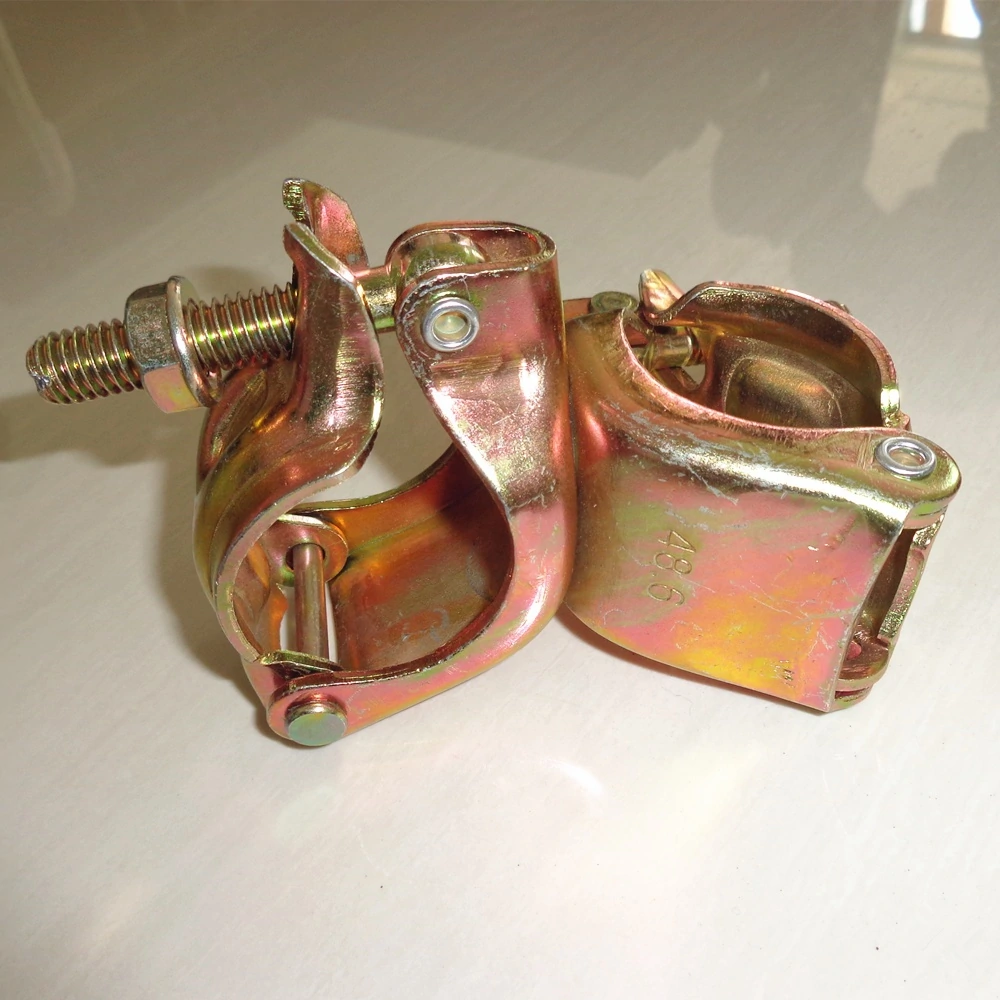
Couplers and clamps connect scaffold tubes, but they do more than hold two pieces of steel together. On a plant, tank, pipe rack, or boiler area, they often decide whether the scaffold can follow the real shape of the structure. Double couplers, swivel couplers, sleeve couplers, beam clamps, board retaining clamps, and girder couplers all serve different jobs. A tube and clamp scaffold without the right fittings can look complete on paper and still slow the crew down on site.
Scaffold Planks and Platforms
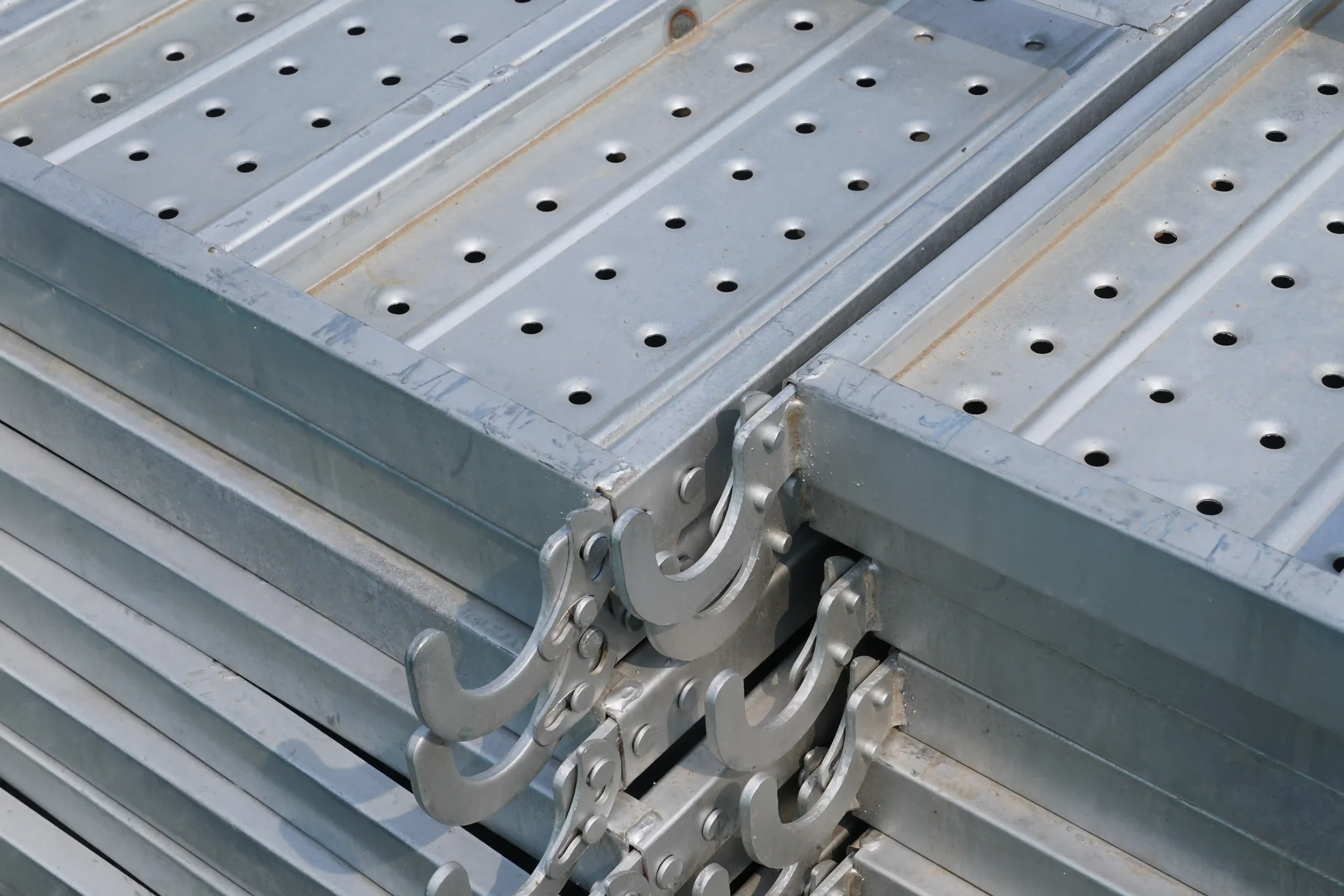
Platform parts are where many low-price scaffold packages start to show the gap. The main frame may look complete in the quotation, but the working run can still have breaks, narrow sections, missing hook boards, or too many areas where workers need to step around instead of walking through the bay smoothly.
A facade job may need long, continuous plank runs so painters, plasterers, or cladding teams can move along the wall. A plant or boiler area may need shorter steel planks arranged around pipes, valves, and equipment. Mobile towers often benefit from lighter aluminum platforms. Buyers need to check platform width, length, hook style, anti-slip surface, load rating, and system compatibility before comparing final prices.
Jacks, Braces, and Transoms

Base jacks help the scaffold start correctly when the ground, slab, or working surface is not perfectly even. U head jacks often appear in shoring, formwork support, and load-bearing arrangements where beams or timber members need stable top support.
Braces help control sway, twisting, and instability as the scaffold becomes taller or longer. Transoms and bearers support the platform width and affect how workers move across the scaffold. These parts may not be the most expensive items in the package, but they often decide whether the layout feels stable and practical during daily use.
Guardrails, Toe Boards, and Access Parts

Guardrails and toe boards protect the working edge. They are easy to overlook during price comparison because buyers often focus on frames, standards, ledgers, and planks first. On site, missing edge protection can stop work, fail inspection, or force the contractor to buy extra parts at the last minute.
Access parts deserve the same attention. Many quotations show the main structure clearly, but the route up to the platform may sit in a small accessory line or not appear at all. A small indoor job may only need a ladder frame or hook-on ladder. A facade run, plant scaffold, power plant shutdown, or bridge platform usually needs stair units, rest platforms, gates, and clear entry points so workers can move safely between levels.
Pins, Clips, Locks, and Small Fixing Parts

Small parts can create big delays when they are missing. Coupling pins, joint pins, spring clips, gravity pins, wedge pins, locking pins, and brace locks do not take much space in a container, but they keep the scaffold connected and usable. Importers and rental companies should ask for a clear packing list so these items do not disappear under a vague “accessories” line.
Why These Parts Matter in a Quote
A scaffold quotation should show more than the main system name. “Ringlock scaffolding,” “frame scaffolding,” or “tube and clamp scaffolding” only tells the buyer the general direction. The real package comes from the parts list.
Before confirming an order, check whether the offer includes the platforms, jacks, braces, couplers, ties, guardrails, toe boards, access parts, pins, clips, and packing details needed for the actual project. This avoids a common buying problem: the scaffold looks cheaper at first, but the missing parts appear later as extra cost, installation delay, or site safety risk.
What Should Buyers Include in a Scaffolding RFQ?
A scaffolding RFQ works better when it starts with the job, not only the product name. “Please quote ringlock scaffolding” or “We need frame scaffolding” gives the supplier a direction, but it still leaves too many blanks. The same system can turn into very different packing lists once the project height, platform width, load, access route, ground condition, and site layout become clear.
Begin with the project type. A building facade, oil and gas plant, power plant shutdown, bridge platform, warehouse maintenance job, and concrete shoring project all create different access problems. The project type helps the supplier understand the work area before preparing the parts list.
Working height comes next, but height alone is not enough. A scaffold for a 10-meter straight facade and a scaffold with several working levels around a boiler do not need the same layout. Also provide the platform length, platform width, number of working levels, bay size preference, and whether workers need access along one straight run or around several sides of the structure.
Load information should be clear from the first RFQ. Some scaffolds only carry workers and hand tools. Others need to handle material storage, equipment, formwork, beam support, slab support, or several crews working at the same time. If the project needs shoring, the buyer should say that clearly instead of treating it like a normal access scaffold.
Site conditions can change the quotation more than buyers expect. Flat concrete, compact soil, slopes, drains, traffic areas, weak ground, machinery, pipe racks, and restricted access all affect the scaffold arrangement. Photos, drawings, or a simple marked-up sketch can help the supplier understand where the scaffold will stand and what obstacles the crew must work around.
If the buyer already prefers ringlock, cuplock, frame scaffolding, kwikstage, tube and clamp, or mobile towers, that should appear in the RFQ. When new components must match existing stock, send component photos, key dimensions, and connection details before production.
Surface treatment, access parts, and safety parts also need clear notes. Hot-dip galvanized, pre-galvanized, painted, and powder-coated parts do not suit the same environment. Confirm ladders, stair towers, guardrails, toe boards, safety gates, platforms, walkways, and special access points before comparing final prices.
Packing and shipping details help avoid problems after production. Provide the destination port, preferred packing method, container type if known, labeling needs, and unloading restrictions. A strong RFQ does not need to be complicated; it just needs the right information early: project type, working height, platform size, load requirement, site condition, preferred system, surface treatment, access parts, safety parts, drawings if available, destination port, and packing requirements.
FAQs About Types of Scaffolding
What are the main types of scaffolding?
On most projects, scaffolding falls into a few practical groups: ground-supported scaffolds, suspended platforms, mobile towers, shoring structures, and modular scaffold systems such as frame, ringlock, cuplock, kwikstage, and tube and clamp. The name matters, but the site condition matters more. A straight wall, a tank farm, a bridge pier, and a warehouse ceiling will not need the same scaffold package.
What type of scaffolding do contractors use most often?
For simple building work, many contractors still start with frame scaffolding because the parts are familiar and the layout stays easy to count. Once the job becomes larger, taller, or more irregular, they may move to ringlock, cuplock, or tube and clamp. The “most common” type changes by market, crew habit, and project shape.
Is ringlock better than frame scaffolding?
Not always. Ringlock gives the crew more layout options, so it performs well around corners, height changes, plant equipment, and heavy-duty access areas. Frame scaffolding can still make more sense on a plain building elevation where the bays repeat cleanly. A buyer should not pay for flexibility if the project does not need it.
When should I choose tube and clamp scaffolding?
Choose tube and clamp when the structure refuses to follow a standard bay. Refineries, boilers, tanks, pipe racks, old buildings, and bridge sections often have awkward angles and short returns. Tubes and couplers let the scaffold crew work around those details. The trade-off is labor: this system needs a skilled team and a clear fitting schedule.
What scaffolding works best for facade work?
A clean facade with a long straight wall often suits frame scaffolding. If the wall has balconies, canopies, curved sections, deep returns, or several working heights, the choice changes. Ringlock gives more adjustment room, while cuplock can fit when the facade still follows a regular grid.
What scaffolding works best for oil and gas or power plant work?
These sites usually need ringlock, tube and clamp, or a mix of both. Pipe routes, tanks, boilers, ducts, valves, cable trays, and steel platforms break up the access path. A simple frame scaffold may look cheaper, but it often struggles once the crew starts building around real equipment.
What is the difference between access scaffolding and shoring scaffolding?
Access scaffolding gives workers a safe place to stand and move while they work. Shoring scaffolding supports load. That load may come from concrete slabs, beams, bridge sections, or formwork. If the project needs to carry structural weight, the buyer should not treat it as a normal access scaffold order.
Is aluminum scaffolding better than steel scaffolding?
Aluminum helps when workers move the scaffold often, especially with mobile towers and indoor maintenance. Steel usually stays ahead for heavy-duty access, outdoor work, industrial jobs, bridges, rental stock, and long-term use. The better material depends on load, movement, exposure, and how many times the buyer expects to reuse the parts.
What scaffold parts are easy to miss in a quotation?
Planks, guardrails, toe boards, ladders, stair units, jacks, pins, clips, couplers, tie parts, and small fittings often create problems when the buyer only checks the main frames or standards. A package can look cheaper because it leaves out the parts the site team will need later.
What information should I send before asking for a scaffold quote?
Send the project type, working height, platform length, platform width, number of working levels, load requirement, site photos or drawings, preferred system, surface treatment, access method, safety parts, quantity, destination port, and packing requirements. A supplier can quote much more accurately when the request describes the job, not just the scaffold name.
Conclusion: Choosing the Right Scaffolding Type
Most scaffold mistakes start before the order is placed. The buyer names a system too early, the supplier quotes a standard package, and the real site problems only appear when the crew starts installation.
A straight building wall does not ask for the same scaffold as a pipe rack, boiler area, tank, bridge pier, or warehouse ceiling. Some jobs need speed. Some need layout flexibility. Some need light movement. Some need a structure that can carry real load, not just give workers a place to stand.
Before comparing prices, describe the job clearly. Share the working height, platform length, load requirement, site photos, ground condition, access route, preferred surface treatment, safety parts, destination port, and packing needs. Once those details are clear, the right scaffolding type becomes much easier to choose – and the quotation becomes much closer to what the site actually needs.